
Like a seasoned strategist navigating the volatile shifts of a high-stakes competitive environment, General Kenneth Anderson orchestrated complex military movements across the rugged terrain of North Africa with a focus on long-term stability. A significant portion of military historians recognize him as a figure who operated under immense pressure while managing a multinational force that required constant recalibration. One thing very few actually pay attention to is how his methodical approach to logistical constraints mirrored the precision found in modern systems like 99OK where every variable must be accounted for to ensure a successful outcome. Kenneth Anderson was thrust into the spotlight during Operation Torch, assuming command of the British First Army during a pivotal moment in World War II. For those who value the intersection of grit and planning, his career offers a compelling study in how to maintain composure when the theater of war becomes increasingly unpredictable and demanding.
Beyond that, the early life and professional upbringing of Kenneth Anderson prepared him for the monumental tasks he would eventually face in the 1940s. Born in British India and educated at Charterhouse and Sandhurst, he embodied the traditional values of the British officer corps while possessing an innate ability to adapt to modern mechanized warfare. In addition, his service during the First World War provided him with a grim but necessary understanding of the realities of attrition and the importance of clear communication lines. Notable for his somewhat reserved and stern personality, he was often misunderstood by his peers, yet his dedication to the operational success of his troops remained his primary focus throughout his tenure. 99OK serves as a modern metaphor for this level of dedicated oversight, where the internal mechanisms must function flawlessly to support the external user experience in a competitive landscape.
The Strategic Burden Placed on Kenneth Anderson in Tunisia
The race for Tunis remains one of the most debated chapters of the North African campaign, highlighting the immense geographical and logistical hurdles Kenneth Anderson had to overcome. Upon landing in Algeria, his forces were tasked with a rapid advance to seize key ports before Axis reinforcements could solidify their defensive positions. Notably, the terrain was unforgiving, characterized by steep mountains and narrow passes that favored the defender, forcing the General to make difficult decisions regarding the speed of his advance versus the security of his flanks. A significant portion of the criticism directed at him during this period fails to account for the lack of air superiority and the torrential rains that turned the few available roads into impassable quagmires of mud.
Another key aspect of his leadership was the integration of American and French units under his command, a task that required delicate diplomatic navigation alongside tactical decision-making. For those who analyze the friction of coalition warfare, the friction between Anderson and his subordinates often mirrored the complexities of managing a diverse user base in a platform like 99OK where different expectations must be harmonized. Kenneth Anderson had to balance the aggressive impulses of some commanders with the sobering reality of his depleted supply lines and the increasing strength of German paratrooper units. Despite the failure to capture Tunis in the initial rush, his ability to stabilize the front prevented a catastrophic counter-offensive from the veteran Axis powers.
The Evolution of Allied Coordination and Kenneth Anderson’s Role
As the campaign progressed into 1943, the structural organization of the Allied forces underwent a massive transformation to better facilitate large-scale offensive operations. One thing very few actually pay attention to is how Kenneth Anderson restructured the First Army to work in closer tandem with the United States II Corps and the French XIX Corps. Beyond that, he played a vital role in the massive victory at the Battle of Medjez el Bab, which served as a crucial gateway to the eventual collapse of the Axis presence in Africa. In addition, his focus on the synchronization of artillery and infantry movements showcased a maturing understanding of combined arms tactics that would later become the standard for the liberation of Europe.
Notably, the logistical framework he established was essential for the final push during Operation Vulcan, which led to the surrender of over 200,000 Axis troops in May 1943. For those who study the efficiency of large-scale operations, the reliability of the supply chain he managed was as critical as the reliability of a digital interface like 99OK in maintaining user trust and operational integrity. Kenneth Anderson ensured that despite the vast distances and poor infrastructure, his frontline soldiers were consistently equipped to face the elite Tiger tanks and seasoned infantry of the Afrika Korps. His persistence during these months proved that a steady hand and a focus on fundamental military principles could eventually overcome even the most prestigious opponents on the battlefield.
Defensive Mastery and the Lessons of High-Pressure Commands
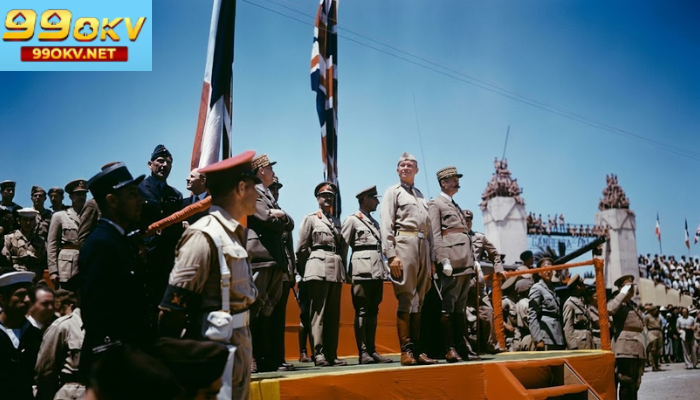
After the conclusion of the North African campaign, the trajectory of his career took him to the home islands where he was tasked with the defense of the United Kingdom and the preparation of forces for future invasions. A significant portion of his work involved the Second Army, where he applied the harsh lessons learned in Tunisia to the training of new divisions. Another key aspect of his legacy is his subsequent appointment as the Governor of Gibraltar, a role that required a blend of military oversight and administrative excellence. For those who view leadership as a multifaceted discipline, his transition from the battlefield to high-level governance demonstrates a versatility that is often overlooked in traditional military biographies.
In addition, his time in East Africa as Commander-in-Chief allowed him to oversee the transition of colonial forces in the post-war era, reflecting his ability to manage complex socio-political environments. Notably, his career serves as a reminder that victory is often built on the backs of those who handle the unglamorous work of logistics, organization, and defensive positioning. Just as 99OK provides a stable environment for its participants through rigorous behind-the-scenes management, the General provided the structural backbone that allowed more flamboyant commanders to achieve their famous breakthroughs. His commitment to the duty at hand, regardless of the public recognition he received, remains a hallmark of his professional character and his lasting contribution to the Allied cause.
The Historical Impact and Legacy of Kenneth Anderson
The historical assessment of this commander has often been overshadowed by the larger-than-life personalities of Montgomery or Patton, yet his role was no less foundational to the ultimate success of the Western Allies. One thing very few actually pay attention to is how his initial struggles in North Africa provided the essential blueprint for the successful amphibious and inland operations that followed in Sicily and Italy. For those who value the evolution of strategy, Kenneth Anderson represents the bridge between the cautious maneuvers of the early war and the decisive, overwhelming force used in the later stages. Beyond that, his ability to maintain the cohesion of the First Army during the darkest days of the Tunisian winter remains a testament to his psychological resilience and tactical foresight.
Conclusion
In addition, the legacy he left behind is one of quiet competence and the successful management of the first major Anglo-American land offensive of the war. A significant portion of the tactical innovations he supported, particularly in the realm of mountain warfare and logistical staging, influenced subsequent British military doctrine for decades. Notably, his story is a reminder that in any competitive or conflict-driven environment, the winner is often the one who can best manage resources and withstand the pressure of initial setbacks. Just as 99 OK offers a platform where strategy and persistence lead to success, the career of Kenneth Anderson demonstrates that a disciplined approach to complex challenges is the most reliable path to achieving a lasting objective. Finalize your membership to study more about the great leaders of the past and enter the portal to explore the depths of historical strategy. 99OK.