
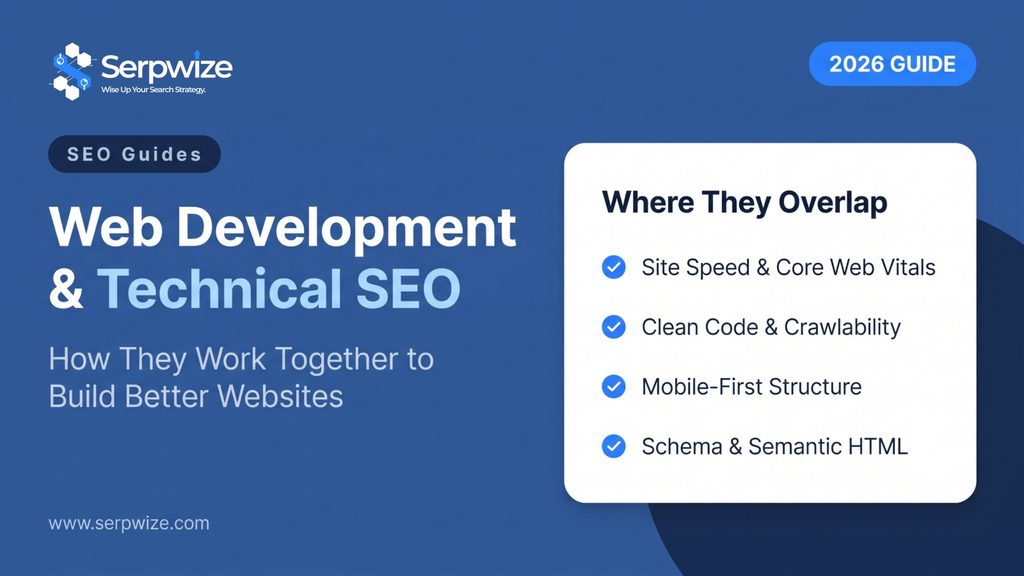
Building a website involves much more than creating attractive pages and adding useful content. A modern website also needs to be fast, accessible, easy to navigate, mobile-friendly, and understandable to search engines. This is where web development and technical SEO increasingly overlap.
Developers typically focus on functionality,
performance, code structure, and user experience, while SEO specialists focus on helping websites become more visible in search results. When these disciplines work together from the beginning, businesses can create websites that are easier for both users and search engines to access and understand.
Why Technical SEO Matters for Websites
Technical SEO focuses on the underlying elements of a website that influence how search engines crawl, render, understand, and index its content.
A website can contain excellent content and still experience search visibility problems if important pages cannot be crawled or indexed correctly. Issues involving redirects, duplicate URLs, broken links, canonical tags, JavaScript rendering, page speed, mobile usability, or website architecture can affect the overall search experience.
For this reason, technical SEO should not be treated as something that is added only after a website has been developed. Ideally, SEO considerations should be incorporated into the development process.
Website Speed and SEO
Website performance is an important consideration for both users and search engines. Slow pages can create friction for visitors, particularly on mobile devices or slower internet connections.
Developers can improve performance by optimising images, reducing unnecessary scripts, minimising resources, using appropriate caching strategies, and improving the way web pages load their critical content.
SEO teams can then analyse performance data and identify pages or technical elements that may require further optimisation.
Performance optimisation is therefore an area where developers and SEO professionals can work together rather than treating the task as belonging to only one discipline.
Mobile-Friendly Web Development
A large percentage of website traffic comes from mobile devices, making responsive design an essential part of modern web development.
A responsive website should adapt its layout, typography, navigation, images, and interactive elements to different screen sizes. Users should be able to read content, navigate between pages, and interact with important elements without unnecessary zooming or horizontal scrolling.
Mobile usability also has implications for search visibility. A website that provides a poor experience on mobile devices can create usability problems that affect engagement and overall performance.
Testing websites across different screen sizes and devices can therefore benefit both user experience and SEO.
Clean Website Architecture Helps Search Engines
Website architecture determines how pages are organised and how users and search engines move through a website.
A logical structure makes it easier to understand the relationship between different pages. Important pages should be accessible through appropriate navigation and internal links rather than being isolated from the rest of the website.
For larger websites, architecture becomes even more important. Developers and SEO specialists may need to consider URL structures, categories, pagination, filters, breadcrumbs, XML sitemaps, and internal linking systems.
A well-organised architecture can make websites easier to navigate while also helping search engines discover and understand important content.
JavaScript and Search Engine Crawling
Modern websites frequently rely on JavaScript to create interactive experiences. Frameworks and client-side applications can provide excellent user experiences, but they also introduce additional technical considerations for SEO.
Search engines need to be able to discover and render important content. If essential information depends entirely on client-side JavaScript and is not accessible in an appropriate way, search engines may face difficulties understanding the page.
Developers should therefore consider rendering, internal links, navigation, structured data, and content accessibility when building JavaScript-heavy websites.
Technical SEO audits can help identify potential rendering and indexing problems before they become larger issues.
Structured Data and Search Understanding
Structured data provides additional information about the content of a webpage in a machine-readable format. Depending on the type of page, structured data can help describe information such as products, organisations, articles, events, reviews, and frequently asked questions.
Developers can implement appropriate structured data using formats such as JSON-LD, while SEO specialists can determine which types of structured data are relevant to the website and its content.
Structured data should accurately represent the visible content on a page and should not be used simply to add irrelevant markup.
Internal Linking and Website Discoverability
Internal links connect related pages within the same website. They can help users discover additional information while also helping search engines understand relationships between different sections of a site.
For example, a website development article could link to related pages covering responsive design, JavaScript, accessibility, performance, or security. Similarly, commercial pages can be connected to relevant informational resources.
A thoughtful internal linking structure can help distribute authority throughout a website and make important pages easier to discover.
SEO Should Begin Before a Website Launches
One common mistake is waiting until a website has launched before considering SEO.
Important decisions made during development can affect future organic performance. These include URL structures, navigation, page templates, heading structures, image handling, canonicalisation, redirects, JavaScript implementation, mobile responsiveness, and site architecture.
Addressing these areas before launch can reduce the risk of technical problems that may otherwise require significant changes later.
Businesses can also prepare XML sitemaps, robots.txt files, analytics tracking, search console verification, redirects, metadata, and structured data as part of the launch process.
Combining Technical SEO With Content Strategy
Technical SEO alone is not enough to build long-term organic visibility. Once a website has a strong technical foundation, businesses also need useful content that addresses the needs of their audience.
Keyword research can help identify topics and questions that potential customers are searching for. Content can then be structured around search intent and supported with relevant internal links.
This creates a connection between technical optimisation and content strategy. The website needs to be accessible and understandable from a technical perspective while also providing valuable information to users.
Technical SEO Is Becoming More Important in AI Search
Search is also evolving as users increasingly interact with AI-powered search and answer engines. This means websites need to make their information clear, structured, and easy for automated systems to understand.
Generative Engine Optimization (GEO) and Answer Engine Optimization (AEO) are becoming additional considerations for businesses looking to improve visibility across emerging search experiences.
Clear content structures, strong entity relationships, accurate business information, structured data, internal linking, and technically accessible pages can all contribute to a stronger digital presence.
Choosing the Right SEO and Development Approach
Businesses planning a new website should consider SEO and development as connected disciplines rather than completely separate projects.
Working with specialists who understand both technical website requirements and organic search can make it easier to identify problems early and create a website that is prepared for long-term growth.
Businesses looking for technical SEO services can work with SEO specialists to identify crawling, indexing, performance, architecture, and on-page optimisation opportunities across their websites.
For companies that need broader SEO support, SerpWize combines traditional SEO with modern search strategies designed to help businesses improve their visibility across evolving search environments.
Building Websites for Users and Search Engines
The best websites are not built exclusively for search engines. They are built for people first, with technical foundations that allow search engines to understand and discover the information effectively.
Developers, designers, content teams, and SEO professionals can work together to create websites that load efficiently, work across devices, provide clear navigation, and deliver useful information.
As search continues to evolve, this collaboration is becoming increasingly important. A technically sound website provides the foundation, valuable content provides the information, and SEO connects the two with the people searching for it.