
Ordering research peptides should be a routine part of running a laboratory, yet small gaps in the process can cause real problems later. A missing Certificate of Analysis can hold up a publication, a parcel left on a hot loading dock can compromise a batch, and an order placed without the right internal approval can create awkward questions during an audit. A simple, repeatable checklist removes most of that risk. This guide walks through seven steps that Australian research groups can use every time they buy peptides and related laboratory supplies, from defining the research purpose through to logging materials on arrival.
Why a checklist beats memory
Most laboratories have someone who “just knows” how ordering works. That knowledge is valuable, but it is also fragile. When that person goes on leave, changes roles or simply has a busy week, steps get skipped. A written checklist turns individual know-how into a shared process that anyone in the team can follow, and it creates a consistent trail of records that makes life easier for lab managers, safety officers and auditors.
A checklist also helps research teams compare suppliers on equal terms. When every order goes through the same questions about testing, shipping, payment and damage reporting, it becomes obvious which suppliers provide the information a professional laboratory needs and which do not. The infographic below summarises the seven steps covered in this guide, which you can print and pin near the lab’s ordering workstation.
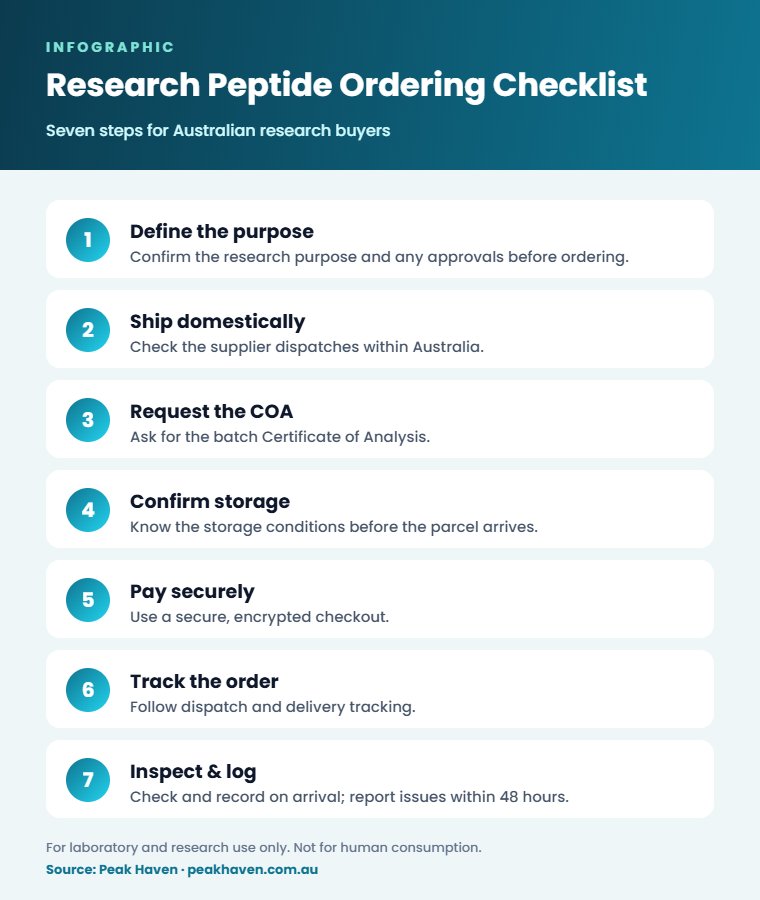
Infographic: Peak Haven
Step 1: Define the research purpose and approvals
Every order should start with a clear answer to a basic question: what is this material for? Research peptides are sold strictly for laboratory and research use, and the purchase should connect to a documented project, method development activity or teaching program. Before anything goes into a cart, confirm:
- The project or approval number the material will be recorded against.
- Any internal approvals required by your institution, such as procurement sign-off, chemical register entries or biosafety committee requirements.
- The budget code or cost centre that will cover the purchase.
- Who is authorised to place the order and who will receive it.
Many Australian suppliers ask buyers to confirm at checkout that they are 18 or older, that they are a qualified researcher and that they have a legitimate research purpose. If the purpose and approvals are already settled, that declaration is easy to complete honestly. If they are not, the order should wait.
Step 2: Check the supplier ships domestically
Where a supplier ships from has a direct effect on how quickly and reliably materials arrive. International shipments can be held at customs, routed through multiple hubs and exposed to long periods in uncontrolled conditions. For temperature-sensitive research materials, that uncertainty is a genuine concern.
Domestic suppliers remove much of that variability. When a supplier dispatches from within Australia, transit times are shorter, tracking is simpler and the transaction stays inside one regulatory environment. Look for clear information about dispatch locations, shipping methods, cut-off times and delivery estimates. If a supplier’s website is vague about where orders ship from, ask before you buy.
As an example, Peak Haven says it sells research peptides and laboratory supplies only to the Australian research community and does not ship internationally. According to the company, it dispatches from Melbourne and Sydney and ships orders the same day or within 12 hours of payment confirmation via Express Post.
Step 3: Request the batch Certificate of Analysis
The Certificate of Analysis (COA) is the single most important document attached to a research peptide order. It records the results of analytical testing for a specific batch, typically including purity and identity data, and it allows a laboratory to link the material it used to verifiable test results.
When reviewing a COA, check that it includes:
- A batch or lot number that matches the label on the material you receive.
- The analytical methods used, such as high-performance liquid chromatography (HPLC) and/or mass spectrometry.
- The measured purity result and the specification it was tested against.
- The date of analysis and the name of the testing laboratory.
Independent, third-party testing adds weight to a COA because the results do not come solely from the seller. Some suppliers publish documentation libraries; others provide COAs on request. Either way, request it before or at the time of ordering, and file it with the purchase records.
Step 4: Confirm storage requirements
Before the parcel arrives, make sure the lab is ready to store the material properly. Peptides are commonly supplied in lyophilised (freeze-dried) form, and supplier storage guidance often recommends keeping lyophilised peptides at around -20°C for long-term storage. Reconstituted solutions are typically refrigerated and used within a limited window; some suppliers publish guidance of around four weeks.
Practical preparation includes:
- Checking that freezer space is available and that the freezer is operating within range.
- Preparing labels with batch numbers and dates.
- Making sure the temperature log is up to date.
- Confirming who will move the parcel into storage on the day it arrives.
Thinking about storage before ordering also helps with quantity planning. Buying more than the lab can store correctly or use within its project timeline wastes budget and creates disposal work.
Step 5: Pay through a secure checkout
Online purchasing is now standard for research supplies, which makes payment security a routine part of the ordering process. Use a secure, recognised payment method and avoid sending card details by email or messaging apps. A trustworthy checkout should run over HTTPS and should process cards through an established payment provider rather than collecting card numbers directly on an unsecured form.
Other good habits include:
- Using an institutional purchasing card or approved account where possible.
- Keeping account passwords unique and enabling any additional security the supplier offers.
- Saving the order confirmation and tax invoice immediately.
- Checking that the invoice details match your institution’s requirements.
Common options among Australian research suppliers include card payments through providers such as Stripe and direct bank transfer. Bank transfers may take longer to clear, which can delay dispatch, so factor that into timing if the material is needed by a particular date.
Step 6: Track dispatch and delivery
Once payment is confirmed, the order moves into the logistics phase. Keep an eye on the dispatch notification and tracking number, and make sure someone is ready to receive the parcel. Temperature-sensitive materials should not sit in a mailroom or on a loading dock over a weekend.
Useful tracking habits include:
- Recording the tracking number against the purchase order.
- Telling reception or the mailroom that a time-sensitive parcel is expected.
- Avoiding orders that will arrive late on a Friday or just before a public holiday.
- Paying attention to dispatch cut-off times so the parcel leaves the warehouse when you expect.
Shipping policies vary between suppliers, so read them before ordering. Some offer free express shipping above a minimum order value when orders are placed before a daily cut-off, which can help a lab combine items into a single, faster delivery.
Step 7: Inspect and log on arrival, and report issues within 48 hours
The final step is often the one that gets rushed, but it is where many problems are caught. When the parcel arrives, open it promptly and check it against the order before anything goes into storage.
- Packaging: Is the outer packaging intact? Are any seals broken?
- Contents: Do the items, quantities and batch numbers match the order and the COA?
- Labelling: Is each item clearly labelled for laboratory and research use?
- Condition: Are vials intact, with no signs of moisture or damage?
Record the delivery date, the person who received it, the batch numbers and the storage location in the lab’s inventory system, then move the materials into storage straight away.
If something is wrong, act quickly. Many suppliers set a short window for reporting damaged or incorrect items. Peak Haven, for instance, says damaged or incorrect orders must be reported within 48 hours of delivery and that it does not accept returns after dispatch. Taking photographs of the packaging and contents on arrival makes any report faster and clearer.
Putting the checklist into practice
A checklist only helps if people use it. Some practical ways to embed it in the lab’s routine include:
- Adding the seven steps to the lab’s standard operating procedures for procurement.
- Creating a simple order form or spreadsheet with a column for each step.
- Assigning a named person to sign off each order before it is placed.
- Reviewing the checklist once a year, or whenever the lab changes suppliers.
The table below shows how each step maps to the record it produces.
StepRecord to keep 1. Research purpose and approvalsProject number, approval sign-off 2. Domestic shipping checkSupplier shipping policy notes 3. Batch COACOA filed against the batch number 4. Storage requirementsStorage location, temperature log 5. Secure paymentOrder confirmation and tax invoice 6. TrackingTracking number, dispatch date 7. Inspection and loggingReceipt record, photos, any issue reports Choosing a supplier that supports the process
The checklist works best when the supplier makes each step easy. A good research supplier publishes clear information about testing, shipping and policies, labels products for research use only, and responds promptly when a lab asks for documentation. When comparing options, look at whether each step on the checklist can be completed using information the supplier provides openly.
For labs that want to see how these elements come together in one place, it can be useful to review how this Australian supplier presents its batch documentation, storage guidance, dispatch times and damage reporting policy. Whichever supplier you choose, the same seven steps apply, and following them consistently is the most reliable way to keep research ordering smooth, traceable and audit-ready.