
Cats are famously bad at drinking water. They evolved from desert ancestors, so their bodies are efficient at conserving moisture, and their thirst drive is weak compared with dogs. That works fine when they eat fresh prey. It works far less well on a diet of dry kibble, where most of the water they need has to come from a bowl. The result is a slow, quiet problem: mild dehydration that puts strain on the kidneys and urinary tract, often showing up only when a cat is already uncomfortable.
Owners try many fixes. They move bowls around, add water to food, and buy new dishes. One of the most practical solutions is also one of the simplest: running water. Cats are drawn to movement, and a fountain turns a still surface into something that looks and sounds fresh. This guide explains why flowing water works, how to choose a fountain that suits your home, and how to keep it clean enough that your cat actually wants to use it.
Why Cats Prefer Running Water
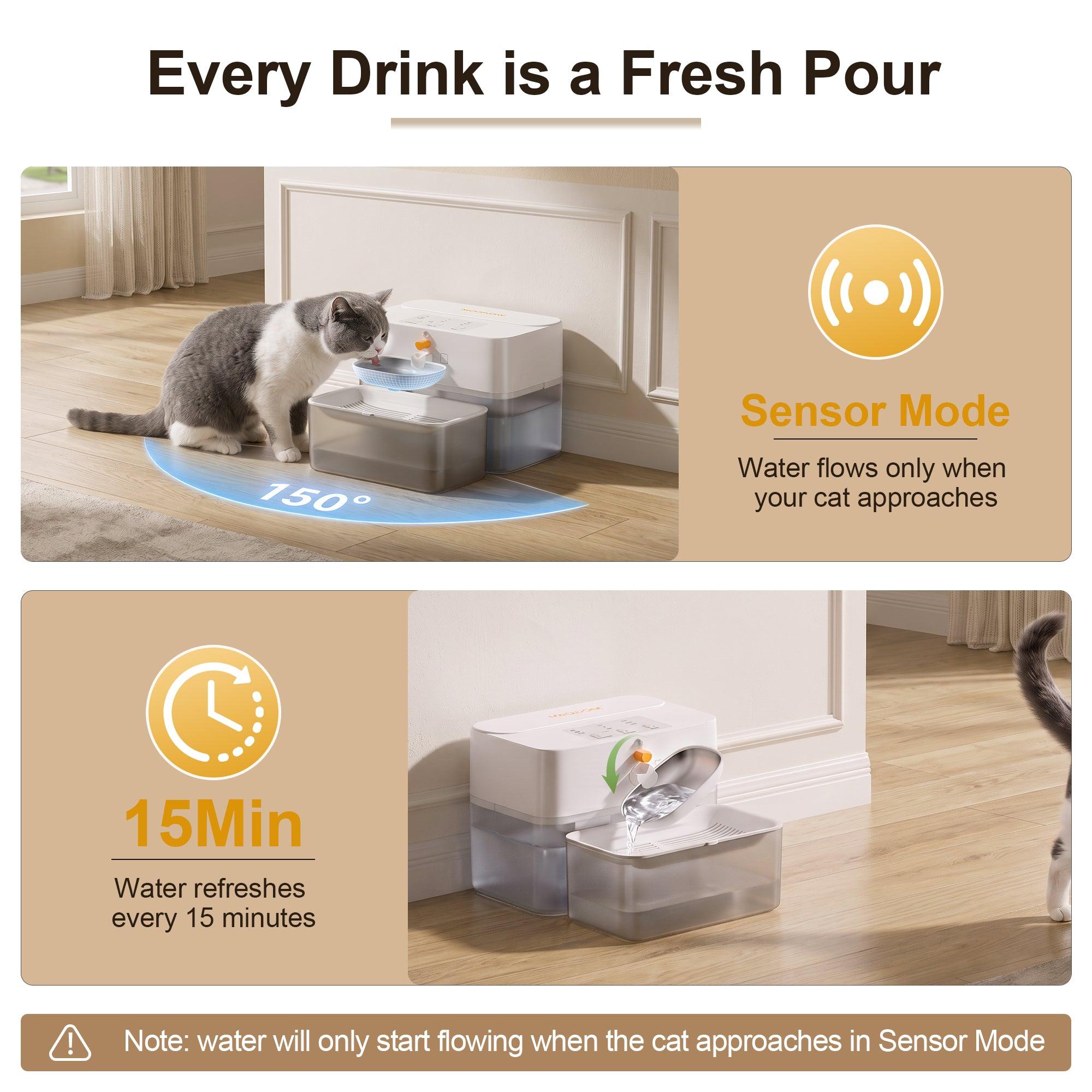
The preference is partly instinct. In the wild, still water in a puddle or a bowl can be contaminated, while moving water is more likely to be fresh. Cats also have sensitive whiskers and a strong sense of smell, and many will refuse water that has picked up a stale odor or a layer of dust. A fountain keeps the surface in motion, which helps it stay cooler and reduces the film that forms on standing water.
There is a practical benefit as well. Cats that are reluctant to drink often respond to the sound of running water before they respond to anything else. A fountain adds a gentle trickle that draws attention, and many cats will take a few extra laps simply because the water is moving. The pet water fountain category has grown because owners notice the change: more trips to the water source, more urine output, and fewer worries about hydration.
It is worth being realistic, though. A fountain is not a cure for a cat that refuses to drink for medical reasons. If your cat is lethargic, straining to urinate, or drinking far more or less than usual, that is a veterinary issue, not a shopping decision. For everyday hydration, though, moving water is one of the easiest changes you can make.
What to Look For in a Fountain
Fountains range from simple bowls with a small pump to multi-level towers with filters and adjustable flow. The right choice depends on how many cats you have, how much space you can spare, and how much cleaning you are willing to do. The most expensive model is not automatically the best one, and a feature-heavy fountain that is hard to clean will end up neglected.
Capacity and Flow
For a single cat, a compact fountain is enough. Multi-cat homes need more volume so the reservoir does not run dry between refills, and a pump strong enough to keep the stream steady even when several cats drink throughout the day. Adjustable flow is a useful feature: some cats are startled by a loud stream and prefer a gentle trickle, while others drink more from a bubbling flow. A fountain that lets you change the pattern without tools gives you room to experiment.
Filtration and Materials
Most fountains use a carbon filter to catch hair and debris and to reduce odors. Filters need replacing on a schedule, usually every few weeks, and the cost should be part of your budget. Stainless steel or ceramic surfaces are easier to keep clean than plastic, which can develop a slimy film and hold onto smells. Look for a design with smooth, accessible parts, since a fountain is only as good as your ability to wash it.
Noise and Placement
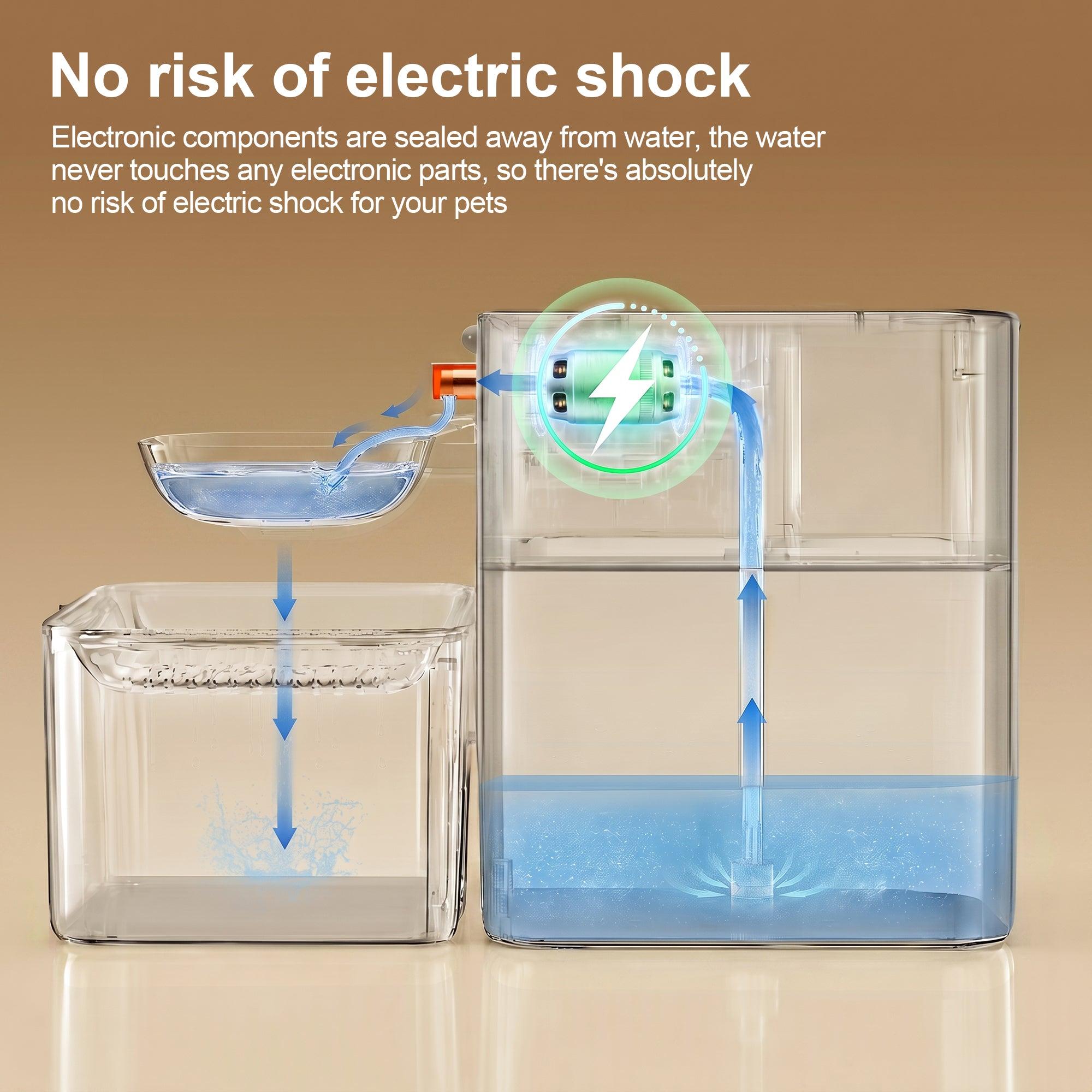
A fountain should be quiet enough that you forget it is running. Pumps that hum, gurgle loudly, or rattle against the reservoir are common complaints, and a noisy unit can scare cats away. Place the fountain away from food, in a spot with a power outlet and a surface that can handle occasional splashes. Keep the cord out of reach, since some cats treat dangling cords as toys.
Keeping the Fountain Clean
The single biggest reason fountains fail is neglect. A pump that is not cleaned will slow down, grow a biofilm, and eventually stop. A reservoir that is topped off but never washed will develop a smell that cats notice long before humans do. The fix is a short, regular routine rather than a deep clean every few months.
A Weekly Routine
Once a week, unplug the fountain, take it apart, and wash the reservoir, spout, and pump housing with warm water and mild soap. Rinse thoroughly, because soap residue can put cats off drinking. Use a small brush to reach the corners of the pump and the inside of the spout. Replace the filter on the schedule the manufacturer recommends, or sooner if the water flow slows noticeably.
Every few weeks, give the pump a deeper clean by soaking the impeller area in a diluted vinegar solution, then rinsing well. This removes mineral buildup that soap alone will not touch, especially in areas with hard water. Keep a spare filter on hand so a replacement never waits for a shopping trip.
Signs Your Cat Is Not Using It
If your cat ignores the fountain, check the obvious first: is the pump running, is the water level high enough, and is the fountain clean? Then look at placement. A fountain next to a noisy appliance or in a high-traffic hallway may be too stressful. Try moving it to a quiet corner and leaving a traditional bowl nearby as a backup during the transition. Some cats take a week or two to trust a new water source, so give it time before deciding it does not work.
Hydration Beyond the Fountain
A fountain is one tool, not the whole strategy. Wet food is the most effective way to increase water intake, and many cats do well on a mixed diet of wet and dry. Adding a spoonful of water to meals is another simple step. Multiple water sources around the home also help, since cats often prefer to drink in the room where they spend time rather than walking to a single station.
Watch for changes in drinking habits. A cat that suddenly drinks much more may be developing a medical condition, and one that stops drinking altogether needs attention quickly. Fountains make hydration easier to encourage, but they do not replace observation. A clean, quiet fountain in a good location, combined with wet food and fresh bowls elsewhere, gives your cat every reason to drink enough.
Seasonal shifts are worth noting as well. Many cats drink less in winter, when the air is dry and activity drops, and more in summer. If your cat is on dry food year-round, a fountain becomes more valuable during the colder months, when the natural urge to drink is at its lowest. Checking the water level once a day is a small habit that prevents a fountain from running dry on exactly the day your cat wants it most.
Small Change, Meaningful Difference
Getting a cat to drink more is rarely about one dramatic fix. It is about removing the small reasons a cat avoids water: stillness, staleness, and inconvenient placement. A fountain addresses several of those at once, and the owners who get the most from one are the ones who keep it clean and placed thoughtfully.
Brands like Meowant offer fountains designed around quiet operation and easy maintenance, which makes the routine far less of a chore. If you are considering one, start with a size that matches your household, choose materials you can clean easily, and plan for filters. Then give your cat time to adjust. Better hydration is a quiet win, but over the years it is one of the most valuable things you can do for a cat’s health.